Hip clicking is something most people notice at some point – during squats, walking up stairs, getting out of a car, or even just rolling over in bed. It can sound dramatic, but in many cases it’s completely benign.
The distinction isn’t the sound itself, it’s whether the click is painful, progressive or limiting movement.
What actually causes hip clicking?
The hip is a deep ball-and-socket joint surrounded by muscles, tendons, and a joint capsule. A click usually comes from one of these structures moving or changing position during motion.
Common causes include:
1. Tendons sliding over bone
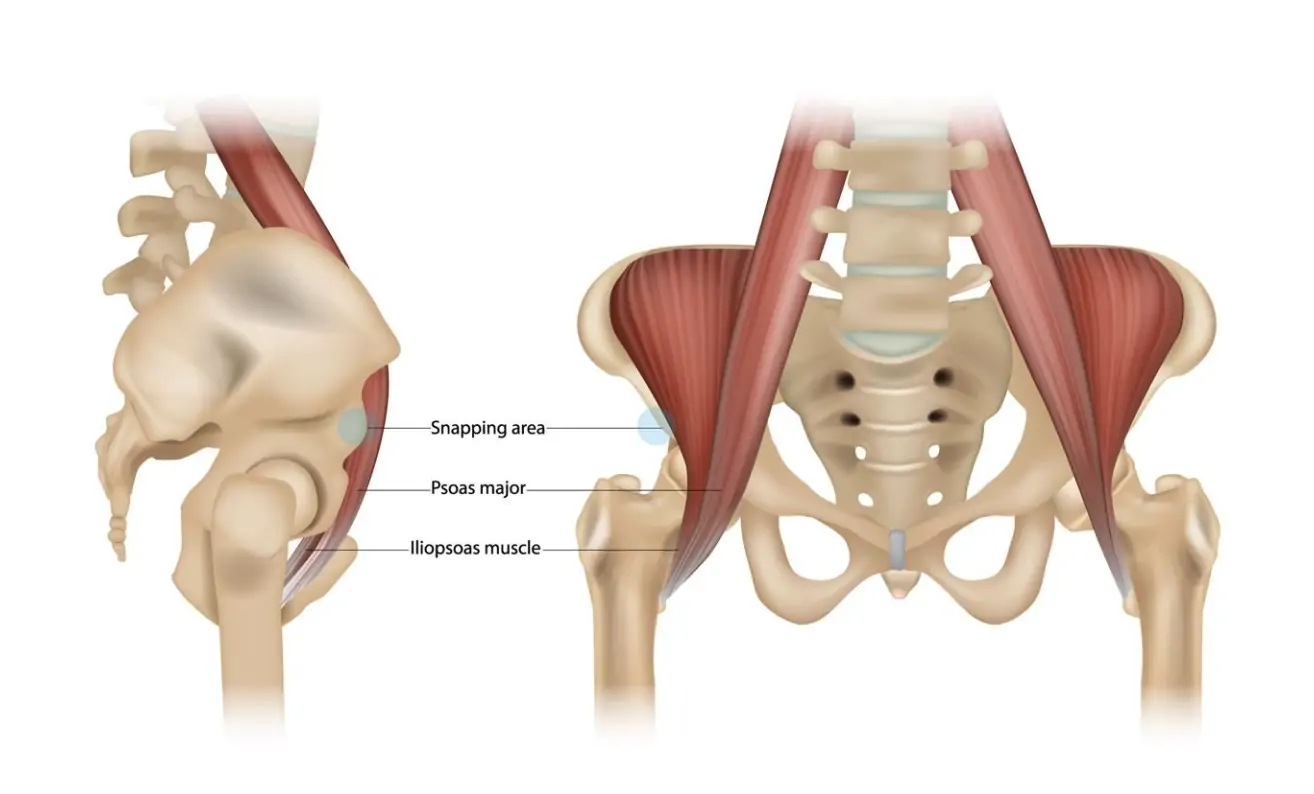
One of the most common reasons. Tendons from the hip flexors or glutes can flick over bony landmarks during movement, creating a snapping or clicking sensation
2. Normal pressure changes in the joint
Small shifts in joint fluid pressure can create a soft pop or click, similar to cracking knuckles.
3. Muscle control and coordination changes
If certain muscles are doing more work than others, movement can become less smooth, which may make clicking more noticeable during specific tasks or ranges
Where do you usually feel it?
– Front of the hip/ groin: often related to hip flexor tendon movement or deep hip motion
– Side of the hip: commonly linked to the gluteal tendons moving over the outer hip
– Deep inside the joint: may be related to joint mechanics or load through deeper ranges
The location can provide clues, but it doesn’t confirm diagnosis on its own.
When hip clicking is usually harmless
Clicking on its own is generally not concerning when:
– It is not painful
– It doesn’t worsen over time
– It doesn’t affect your ability to move, train, or function
– It is intermittent rather than constant
Many people have clicking hips long-term with no issues
When a click becomes more important: Painful hip clicking
A painful click is different. Pain suggests that the movement is now irritating a structure rather than just passing smoothly.
Painful clicking may be:
– Felt in the groin or front of the hip
– Occurring in deeper positions (squats, lunges, getting up from low chairs)
– Followed by a lingering ache after activity
– Associated with stiffness or a feeling of “pinching”
In these cases, it’s less about the sound and more about how the hip is tolerating load and range of motion.
What you should do if your hip click is painful
If clicking is accompanied by pain, the goal is not to “push through it” or aggressively stretch it out.
Instead, start with:
1. Modify aggravating positions
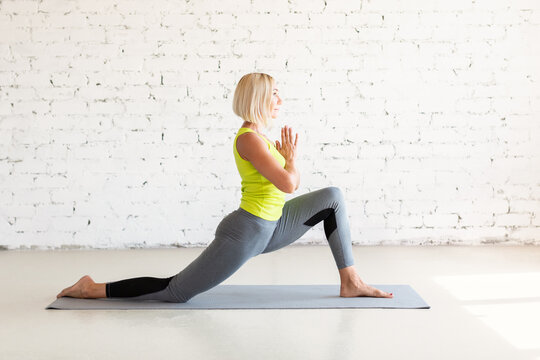
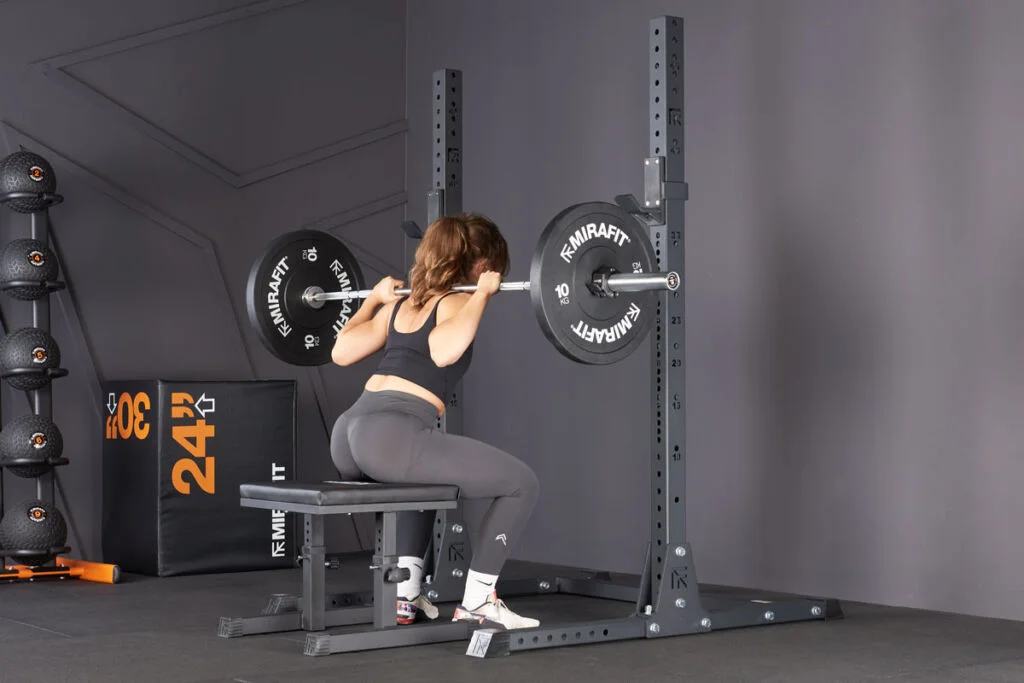
– Reduce depth in squats or lunges temporarily
– Avoid repeatedly pushing into the exact range that provokes the pinch
– Adjust training volume if symptoms flare after activity
2. Monitor load response
– Pay attention to how the hip feels 24-48 hours after activity
– If symptoms settle quickly, the load is usually acceptable
– If symptoms linger or worsen, it may need adjustment
3. Focus on control and strength
– Glute and hip stability work (bridges, side-lying work, single-leg control)
– Improving how the hip moves under load rather than just how far it moves
– Rebuilding tolerance gradually rather than avoiding movement completely
4. Don’t rely on stretching alone
– Stretching a painful hip that is already irritated can sometimes make symptoms worse
– The issue is often control and load, not just tightness
When to get it checked
It’s worth seeing a physiotherapist if:
– Painful clicking is persistent or recurring
– It limits your training, walking, or daily activities
– You feel catching, locking, or instability
– Symptoms are not improving with load modification
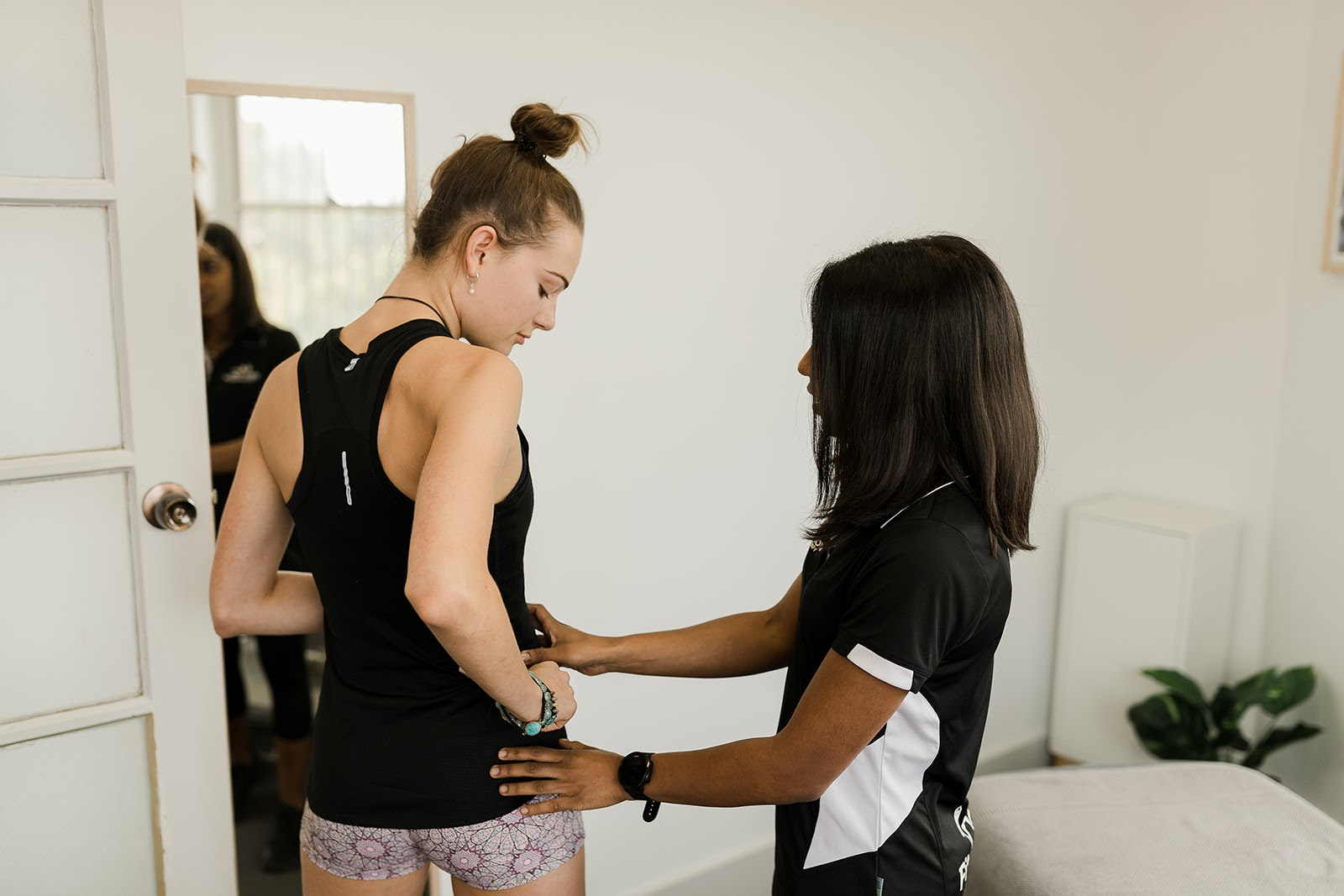
A physiotherapy can help determine whether the issue is tendon-related, joint-related, or movement-control related, and guide a clear plan forward.
The Takeaway
Hip clicking is often just a normal part of movement, especially when it is not painful.
If symptoms are present, seek advice from a health professional to help diagnose the issue, manage load, and guide appropriate treatment pathways.