
Fallen directly onto your shoulder? Noticed a bump at the top of your shoulder? Or getting pain when you bench press or reach across your body?
You might be dealing with an AC joint injury!
AC joint injuries are common in contact sports, cycling, falls and gym-related injuries. The good news? Most don’t require surgery, and even if your shoulder is left with a visible bump, this doesn’t mean it won’t functional well!
What Is The AC Joint?
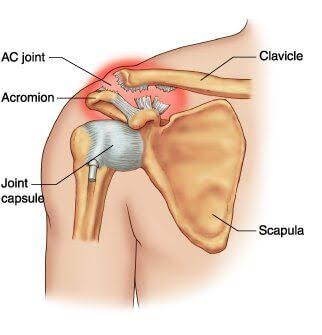
The acromioclavicular (AC) joint is the small joint at the top of your shoulder where your acromion (part of your shoulder blade) meets the clavicle (collarbone).
The joint is held together by strong ligaments that provide stability between these two bones.
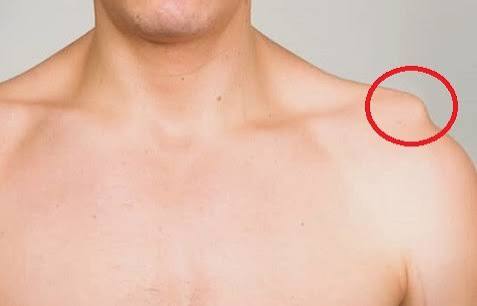
When you fall directly onto the outside of your shoulder, these ligaments can be injured. If the injury is more significant, the clavicle can sit higher relative to the acromion, creating a “Step deformity”.
How do you know if you’ve injured your AC joint?
AC joint pain is usually very localised to the top of the shoulder, right where the joint sits.
You may notice:
> Pain when lifting arm
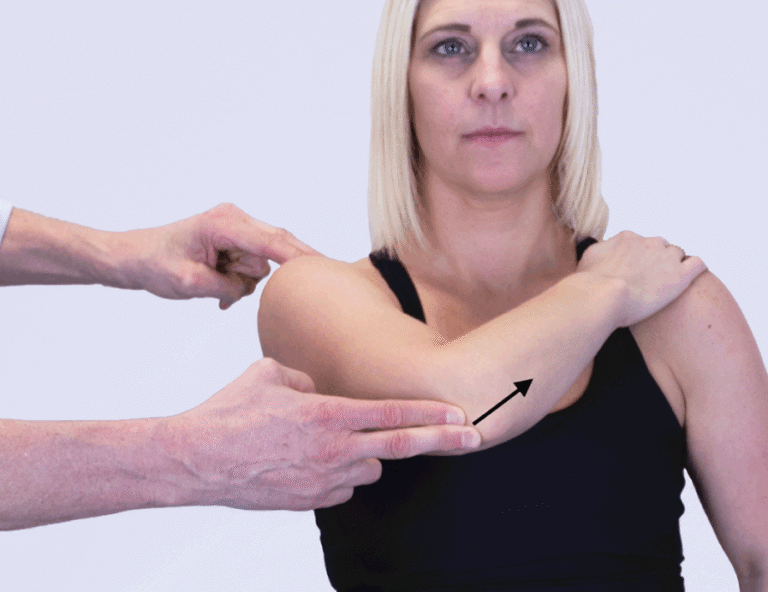
> Pain reaching across your body
> Pain lying on affected side
> Tenderness directly over the AC joint
> Pain when pushing or pressing movements
> Swelling or bruising following an injury
> A visible step deformity at the top of the shoulder in higher grade injuries.
A classic AC joint injury occurs after a direct fall onto the outside of the shoulder. However, AC joint can also develop gradually from repetitive loading.
What is the role of Physio for AC joint injuries?
The first step is working out exactly what you’ve injured and how irritable it is.
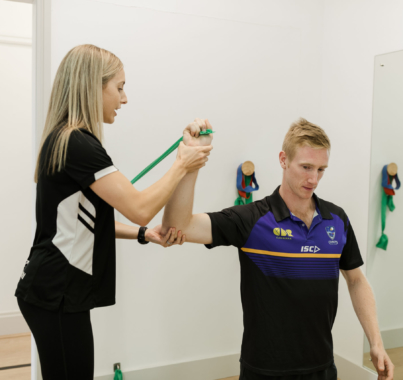
Your physio will assess your shoulder movement, strength, tenderness and stability as well as the AC joint. They’ll also assess the shoulder to make exclude other injuries.
Following an acute injury, your physio can also determine whether you need imaging or referral for further assessment, particularly to rule out a fracture.
Once a diagnosis has been reached, a rehab plan will be made, all about progressively building your shoulder’s capacity
AC Joint Rehab
1. Calm the pain down
Initially, the focus is on settling pain and irritation while maintaining comfortable shoulder movement. This may involve modifying aggravating activities and introducing gentle exercises.
2. Restore pain-free movement
As symptoms, shoulder range of motion is gradually increased and normal use of the arm is restored.
3. Build strength and stability
Strength and stability are progressively developed through the rotator cuff, scapular muscles and surrounding muscles. This increases the amount of load the shoulder can tolerate.
4. Load the AC joint
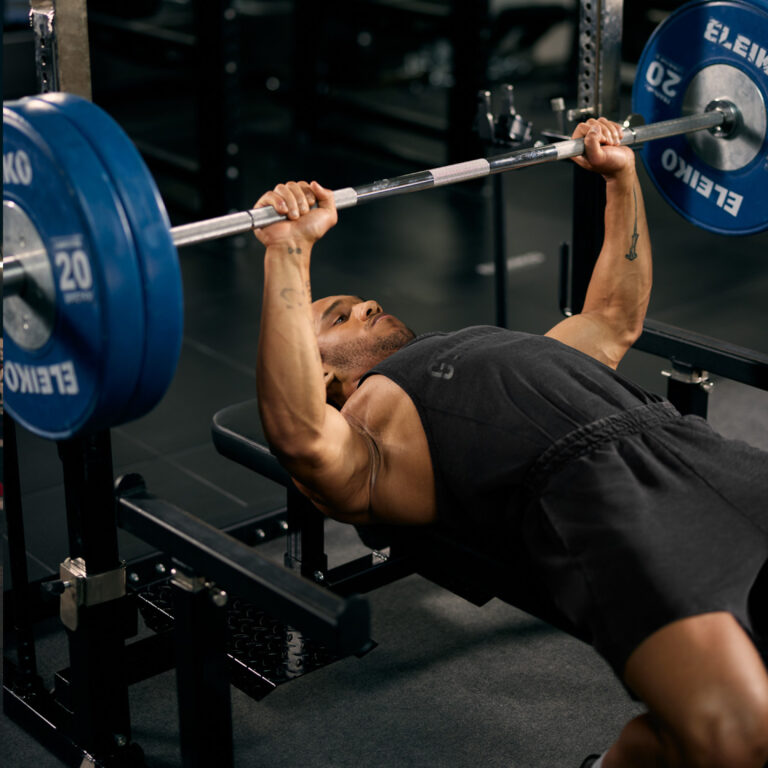
As capacity improves, exercises that place greater load through the AC joint are progressively reintroduced, such as bench press, push-ups, dips and overhead pressing. Range, resistance and volume can be adjusted to gradually build tolerance.
5. Return to higher-level activity
For those returning to sport or higher-level activity, the final stage may include heavier loading, faster movements and plyometric exercises to prepare the shoulder for the demands of sport, work or training
What about the bump?
A higher-grade AC joint injury can leave a permanent step deformity at the top of the shoulder. While this can look concerning, the appearance of the joint doesn’t necessarily reflect how well the shoulder functions.
You can have a visible bump and still have a strong, stable and highly functional shoulder!
The Takeaway
An AC joint injury can be painful, and may leave a noticeable step deformity. Good thing is, the appearance of the shoulder, doesn’t determine how well it will function !
Most AC joint injuries can be managed conservatively with the right rehabilitation approach. The focus is on settling pain, restoring movement, rebuilding strength and stability, and progressively exposing the shoulder to greater loads. This includes from everyday activities through to bench press, push-ups and plyometric exercises.
If you’ve injured your AC joint or are struggling to return to training, a physio assessment can help determine what’s going on and guide your rehabilitation