
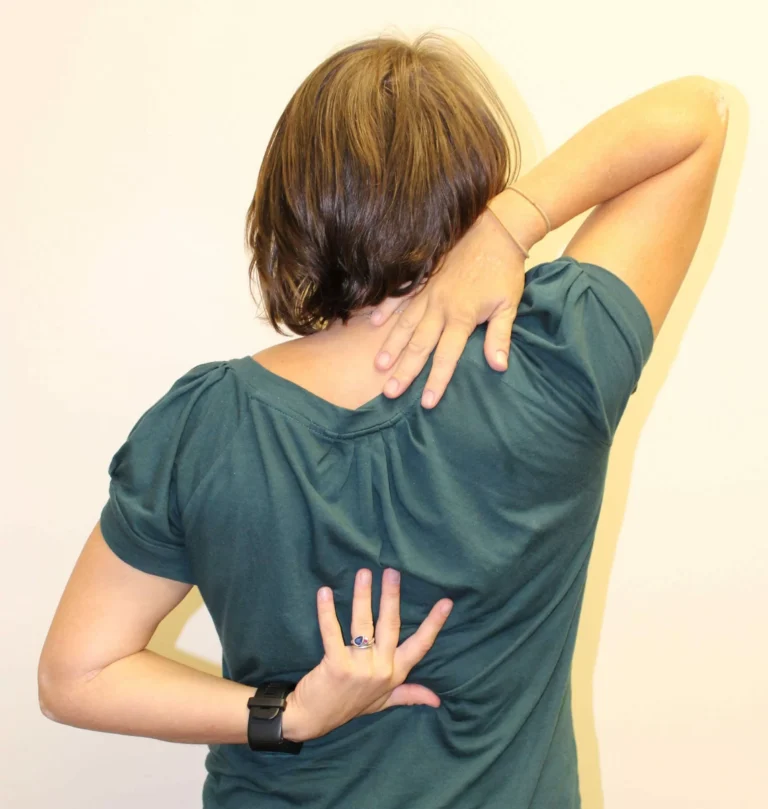
Hand Behind Your Back (HBB) and Hand Behind Your Head (HBH) are two of the first movements your physio will often ask you to perform.
They might seem simple, but these quick tests can tell us a lot about how your shoulder is moving, what structures may be involved, and how your symptoms affect everyday life.
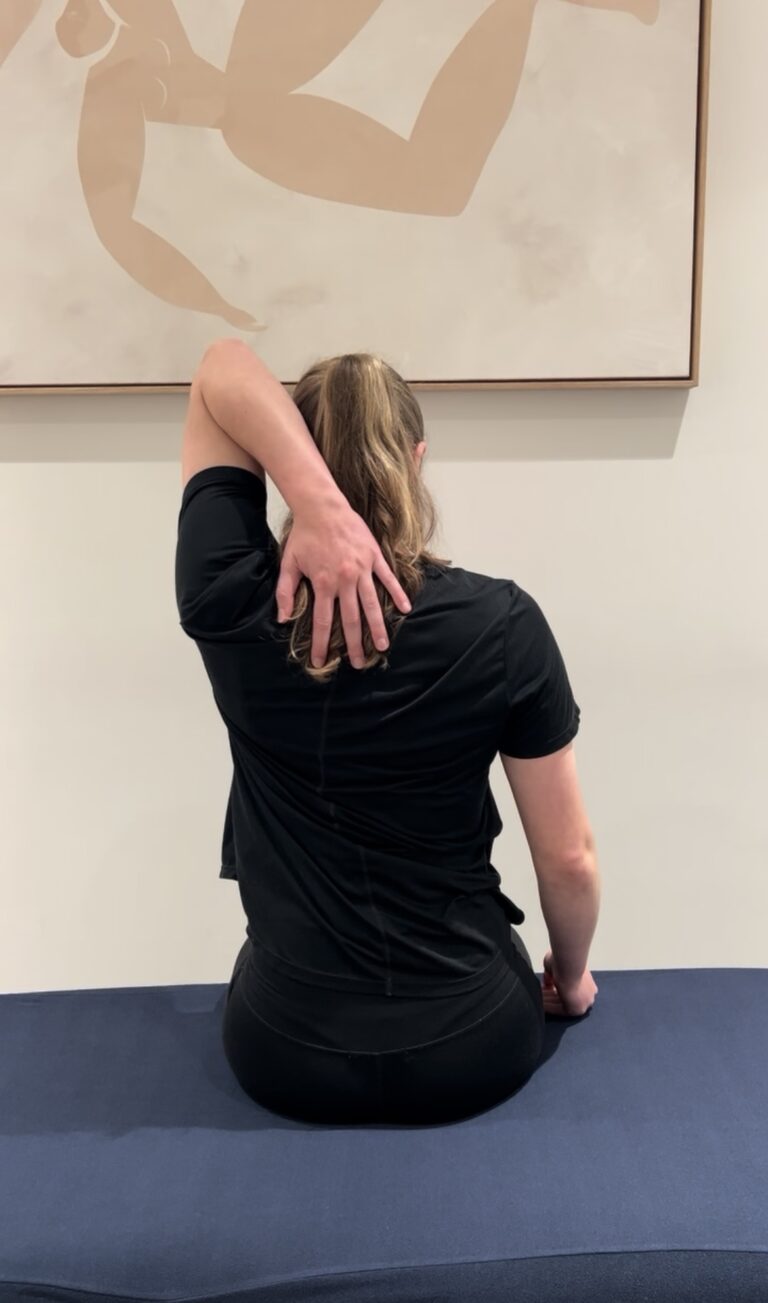
Hand Behind Back (HBB)
This movement includes reaching one hand up behind your back, as though you’re trying to your shoulder blade.
In everyday life, we use this movement more often than we realise. Think about:
– Tucking in your shirt
– Fastening or unfastening a bra
– Reaching into your back pocket
– Scratching the middle of your back
– Pulling up your pants or shorts
– Washing or drying your lower back
To achieve this position, your shoulder need a combination of:
– Internal rotation
– Extension
– Adduction
– Good movement of the shoulder blade
If this movement is painful or limited, it can point towards conditions such as:
– Rotator cuff related shoulder pain
– Shoulder impingement
– Frozen shoulder
– Arthritis
– General shoulder stiffness following injury or surgery
Sometimes it’s not just about pain. You might notice one side simply doesn’t reach as high as the other, which can help identify mobility restrictions before they become a bigger problem.
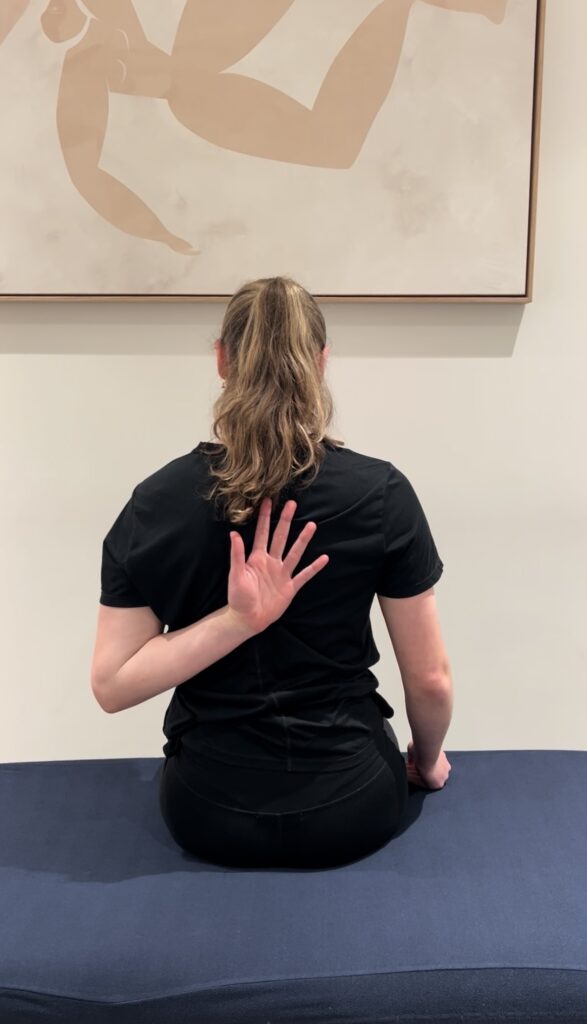
Hand Behind Head (HBH)
Next, we ask you to place your hand behind your head, like you’re relaxing on the couch or washing your hair.
This movement is essential for many daily tasks, including:
– Washing or styling your hair
– Reaching overhead
– Putting on a jumper or jacket
– Taking off a shirt
– Resting with your hands behind your head
– Reaching into high cupboards
This position requires:
– External rotation
– Abduction
– Elbow flexion
– Good upward rotation and control of shoulder blade
Pain or restriction here may suggest:
– Rotator cuff pathology
– Shoulder instability
– Post-operative stiffness
– Neck restriction
It can also reveal weakness or altered movement patterns that aren’t always obvious during normal shoulder movement.
Why Do Physios Test These?
These aren’t just random stretches. As physio’s, we’re interested in how far you can reach, but we’re more interested in how you get there.
We’re looking at:
– Where your pain occurs
– How much movement you have
– Whether your shoulder blade moves normally
– If you compensate by twisting your trunk or lifting your shoulder
– Differences between your left and right side
Because these movements combine several shoulder motions into one, they provide a quick snapshot of your shoulder function and often reproduce the activities that are difficult in everyday life.
They also give us an easy way to measure progress. If you couldn’t reach your bra strap, wash your hair comfortably,, or scratch your back at your first appointment, we can compare these same movements throughout your rehabilitation to see how you’re improving.
The Takeaway
Being able to reach behind your back and behind your head isn’t about flexibility for the sake of it, it’s about maintaining independence in everyday life.
If either movement is painful, stiff or noticeably different from the other side, it may be your shoulder’s way of telling you something isn’t quite right.
The good news? Identifying these limitations early allows us to determine what’s causing the problem and develop the right treatment plan to get you back to doing the things you need and want to do, without pain!